
Day trading suits individuals who can commit several hours per day to the markets and prefer a structured routine without holding trades overnight. In most cases, scalpers aim to open between 5 and 10 trades per hour. But for starters, we recommend that you start with just a few trades. Third, ensure that you are setting the right trade sizes and the right leverage. Further, you need to be patient before you start your trading career. Don’t start scalping before you have a good understanding of how trading works.
Pros of Swing Trading
The EUR brings liquidity, and the JPY adds volatility, making this pair a good option for scalpers, especially during the overlap of European and Asian sessions. A slower moving average that serves as a reference for the broader trend. Keep in mind, scalping is not for everyone, as it requires a lot of time and energy.
Scalpers use a high-frequency trading strategy that relies on a solid understanding of market patterns and technical analysis. This strategy requires a high-performing computer and a fast, reliable internet connection to handle the rapid trades. Although sometimes confused as the same, there are different strategies, risks and benefits involved with scalping vs. day trading. Active traders often look for opportunities to profit from short-term price movements, but not all strategies are created equal.
Risks and Benefits of Swing Trading
Choosing the right trading style is one of the most important decisions a trader will ever make. Many beginners fail not because their analysis is wrong, but because their trading approach does not match their personality, time availability, or risk tolerance. Among the most common and widely practiced approaches in financial markets are scalping, day trading, and long-term trading. While all three aim to profit from price movements, they differ dramatically in execution speed, holding period, psychological demands, and risk management requirements. Understanding these differences is essential for building a sustainable trading career rather than relying on trial and error.
- Dominion Market provides institutional liquidity, meaning your trades will always get matched.
- Key tools include earnings reports, GDP growth rates, interest rate trends, and inflation data.
- This strategy requires staying informed about macroeconomic factors and global events that can influence market trends.
- Unlike day trading, it does not require constant monitoring throughout the trading session.
- While most brokers don’t charge account maintenance fees, withdrawal and deposit costs vary based on the payment method—bank transfers, cards, or e-wallets.
- Because scalping relies on high-frequency, low-margin trades, the win rate is typically higher than other trading styles, but the reward per trade is smaller.
Options Trading: What are Option Spread Types?
This is different from scalping where positions are opened and closed within a few minutes. As I will explain later, technical analysis plays a critical role in scalping trading. Many scalping brokers provide charting tools on their platforms, though traders might also want to consider buying third-party software which offers more advanced and customizable options. Having been a retail trader since 2013, Plamen has gained an in-depth understanding of the challenges that novice traders face today. His expertise is swing trading and day trading with a heavy emphasis on psychological and fundamental analysis.
How do different market conditions affect Scalping, Day Trading, and Swing Trading outcomes?
With a trading system, the computer algo makes a trade whenever it sees a trading opportunity, without waiting for the trader to assess the particular details of that trade. The 1-minute chart (M1) allows you to see the smallest movements, which can be advantageous, but also exposes you to market noise—false signals due to random minimal movements. The best assets are those with high liquidity and volatility, such as currency pairs, large-cap stocks, and cryptocurrencies. Another advantage is the applicability of scalping in many financial markets.
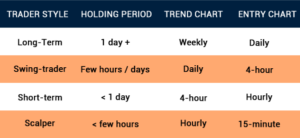
Win Rate and Risk-Reward Ratio
Traders must respect daily loss limits, avoid overtrading, and remain objective during volatile sessions. Regulatory bodies and trading education platforms emphasize that day trading is not about constant activity but about waiting for high-probability setups. Scalping is best suited for traders who can dedicate full attention to the markets, thrive under pressure, and have access to a reliable trading platform and broker infrastructure. This is a popular strategy that involves looking at an existing trend and following it.
Traders focus on capturing trends or reversals using technical indicators and chart patterns. This strategy allows more flexibility and is often chosen by traders with time constraints or those managing trades part-time. Scalping is a short-term trading strategy in which traders open and close positions quickly, typically within seconds to a few minutes, targeting small incremental gains on each trade. Rather than waiting for large moves, scalpers rely on high trade frequency and tight risk control, with each individual trade contributing a small amount to the overall result.
EMAs can be a great way of determining trend direction as specific trading parameters can be adjusted. Shorter EMA settings (i.e. those below 50 price periods) will send a larger number of buy/sell signals during each trading session. When prices cross below the 50-period EMA, a sell signal emerges and short positions can be established. Conversely, buy signals become visible when market prices cross above the EMA dividing line and long positions can be established. As this occurs, expert scalpers would close the long trade and collect small profits on the position. Volume indicators, such as the On-Balance Volume (OBV), help scalpers gauge market activity and strength.
This is why scalpers consistently seek the tightest spreads available. iqcent trading platform review Because profits per trade are small, scalping is highly sensitive to trading costs. The two components that matter most are the spread and the commission. Understanding Market Patterns and technical and fundamental analysis is essential to making money day trading.
Key Differences Between Short-Term and Long-Term Trading
Scalpers often focus on highly liquid assets, such as stocks or ETFs, where tight bid-ask spreads make rapid trading more efficient. Tools like order book analysis, momentum signals and high-frequency trading platforms can all help investors enter and exit trades in seconds. Unlike day trading, swing trading does not require constant monitoring of the markets. However, it does demand regular attention to price charts and market signals. Scalping is a high-frequency trading strategy that involves making dozens or even hundreds of small trades throughout the trading session.
What are the psychological challenges of Scalping, Day Trading, and Swing Trading?
Traders must be able to handle the stress of making quick decisions and managing multiple trades simultaneously. Emotional control and discipline are critical to avoid overtrading or reacting impulsively to market movements. Scalpers must develop a routine with regular breaks to avoid burnout and maintain peak performance. Many scalpers use leverage to amplify their returns, but it also increases the risk. Managing leverage effectively is vital to ensure that the trader does not take on excessive risk. Scalpers should use leverage cautiously and avoid overleveraging, as even small price movements can lead to significant losses.
Choose stock trading
Swing trading has a number of advantages, including the ability to profit more from fewer trades and take advantage of market swings over the medium term. The information on this website does not constitute investment advice, and TradingBrokers.com does not make any offers or solicitations to buy or sell any financial instruments. To succeed in forex, you’ll need to get a good handle on both these areas. Understand the basics of currency pairs and keep a watchful eye on the market fundamentals. This knowledge will serve as your foundation for both forex scalping and long-term trading.
Pros and Cons of Swing Trading
The popularity (and therefore high liquidity) of these pairs means that spreads are narrower than for minor and exotic currency pairings. Larger forex brokerages tend to have the infrastructure in place to handle rapid order execution, and so are happy to let scalpers go to work. The most popular platforms for scalping are MetaTrader 4 (MT4), MetaTrader 5 (MT5), and cTrader, each offering features tailored to high-frequency trading. Tastyfx is a new brand name of IG US and a part of IG Group, which is a publicly traded company listed on the London Stock Exchange.
By focusing on tiny, frequent price movements, scalpers avoid the overnight risk exposure that comes with swing trading. This makes the strategy more insulated from sudden news or after-hours market events that can cause sharp price swings. Swing trading relies on technical analysis, such as chart patterns, candlestick signals, and momentum indicators. Some swing traders also consider fundamental factors to strengthen their decision-making. This strategy allows for a more relaxed trading pace compared to scalping or day trading. Swing Trading targets intermediate market moves by holding positions from a few days up to several weeks.